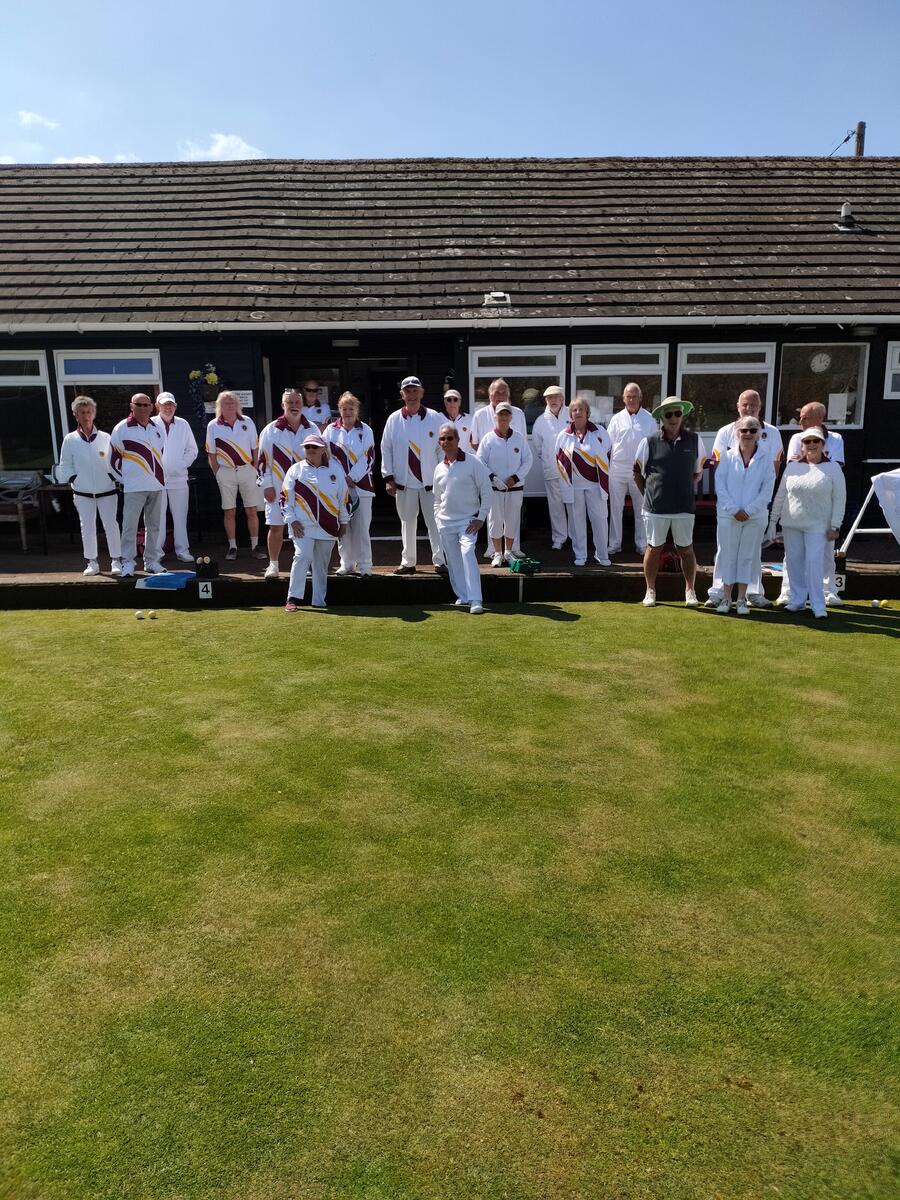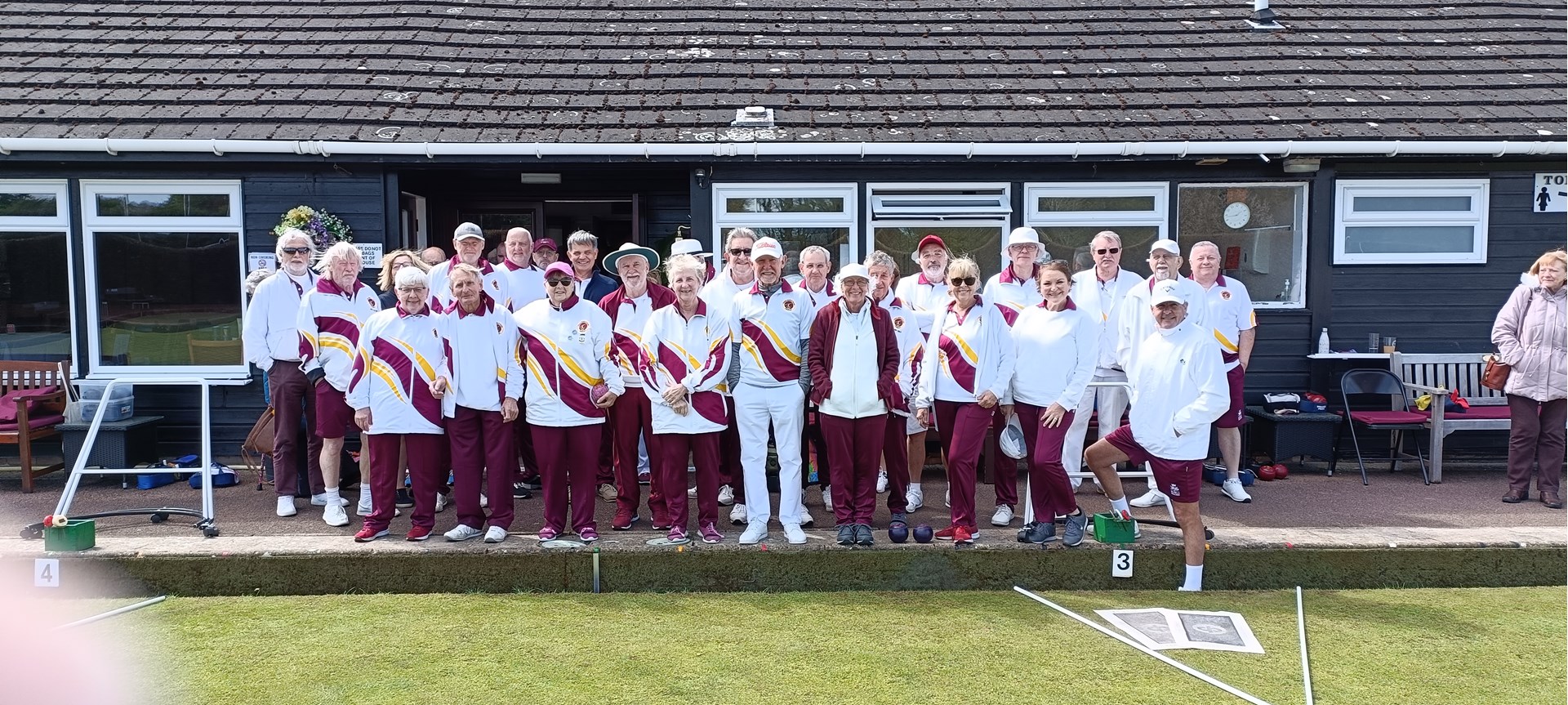
banner
test
Home
How to Find Us
History
Open Days
Playing Bowls
Fixtures and Results
      - Men and Mixed
      - Ladies
      - Indoor
      - Other Competitions
Finals 2009
Newsletter
Links
      - Local Bowls Clubs
      - Other
Contact Us
 

Playing Bowls

Introduction

bowl and jack

This page is aimed at the bowls beginner and those who are considering trying their hand and perhaps wondering what the game's all about. Of necessity the following outline of the game is a much simplified account of the basics, but if you'd like to find out more, click here for a more detailed account.

Objective

The aim of the game is simple: to get your bowls, either as an individual or team, head of bowls closer to the target than your opponent. The target is a small white or yellow spherical ball known as the jack (pictured above with a bowl) and you score one shot (i.e. a point) for each bowl closer to the jack than your opponent's nearest bowl. The graphic on the right shows a position after an end in singles where each player has delivered their four bowls. The person playing with the orange bowls has two bowls closer to the jack than the nearest black bowl and therefore scores two shots.

Playing area

Bowling greens are normally square, but may be rectangular, up to 40 m in length and surrounded by a ditch and bank. rink markings Although usually of grass, some greens are made from synthetic material. The green is divided into parallel rectangular playing sections, usually six or seven in number, known as rinks and indicated by a central number on the bank where vertical rink markers also indicate the rink's extremities. The photograph shows the rink markings of rink 4, with a game in progress in the adjoining rink. Click here to see a larger image.

Bowls

Although bowls are sometimes called woods from their original source, the vast majority produced nowadays are made of a high density plastic. coloured bowlsBowls are manufactured so that the biased side is slightly heavier than the other. When rolled, the bowl initially starts on a straight path, but as it slows down the effect of the bias becomes increasingly apparent is it curves towards the target. Bowls are sold in sets of four and are available in a wide range of sizes, of different weights and biases, and an increasing number of colours and effects.

Formats

One advantage of bowls over many games is that it can be played between different numbers of people. fours matchSingles involves one person playing another, each player using four bowls; pairs is played between two teams of two, each player again using four bowls; triples between two teams of three, each player having three bowls; and fours (sometimes confusingly called 'rinks') involves two teams of four, each player bowling two bowls. Games between two sides are a core feature of bowls and are usually played between teams of four or three players, often with mixed sexes, and the winning team decided by the highest aggregate score. The picture shows a match between two sides, each with six teams of four players, i.e. involving a total of 48 players. Is there any other game that can accommodate so many players on so small an area?

Start

preparing to 
deliver bowlAll the games outlined above start the same way: the jack, having been legally delivered up the green by one of the players standing on a small rubber mat, is centred. Players on opposing sides then take their turns in alternately delivering their bowls (pictured) trying to achieve their objective.

Ends

When the players from both sides have delivered all their bowls in one direction and the score has been agreed, an 'end' has been completed. The next end finishes when all the bowls have been played in the reverse direction and the score agreed.

Scoring

With the exception of singles, which is normally decided by the first player to score 21 shots, other formats are determined by the score after the requisite number of ends have been played. Pairs is usually decided over 21 ends; triples over 18 ends; and fours over 21 ends.

Duties

In team games, each player has specific responsibilities. measuring for shotIn fours, for example, the lead (the first person to bowl) places the mat, delivers the jack and ensures that it's centred. The second player is responsible for recording the scores on a score card and agreeing them with his opposite number while the third player measures disputed shots with a special bowls measure (pictured). The fourth player is the skip (short for skipper) who has sole charge of the team in dictating the strategy and tactics.

Why Play Bowls?

Unlike many sports, bowls is easy to grasp and most beginners achieve fairly quickly a standard good enough to enjoy playing. And what other game allows all ages and both sexes to compete on level terms whilst also providing a low impact, therapeutic form of exercise. Click here to read more about the benefits of this great game.


test
 
test
test

Announcements


Three Dates for Your Diary

Fun Day Saturday, 2 October from 12 noon till late. Attractions include target bowls, golf, limbo bowls, skittles and hoops. Not forgetting a BBQ!

Ladies' Autumn Meeting Wednesday, 6 October at 7 pm. All ladies welcome.

Quiz Night Friday, 8 October at 7 pm. £5.50 per person including food. Maximum 8 per table. Please add your name to the list on the notice board by the main entrance.


Other Competitions

Click here to see details of those finals of the Watford and District Bowls Association competitions involving our members.


Website

Members' ideas and comments on this new site are welcomed by and watch out for new menu subjects over the coming months.

test
test
test
 
test
test
Acknowledgement

Metcalfe board

We wish to acknowledge with grateful thanks the generosity of F W Metcalfe & Sons in providing this board that has greatly facilitated visitors finding our Club. Click here for Metcalfe's website.

test
test
test

  Home  l   How to Find Us  l   History  l   Open Days  l   Playing Bowls  l   Fixtures and Results (Men and Mixed)  l   Fixtures and Results (Ladies)  l  
Fixtures and Results (Indoor)  l   Other Competitions  l   Finals 2009  l   Newsletter  l   Local Bowls Clubs  l   Other Links  l   Contact Us

Copyright© 2010 www.tringbowls.co.uk
test